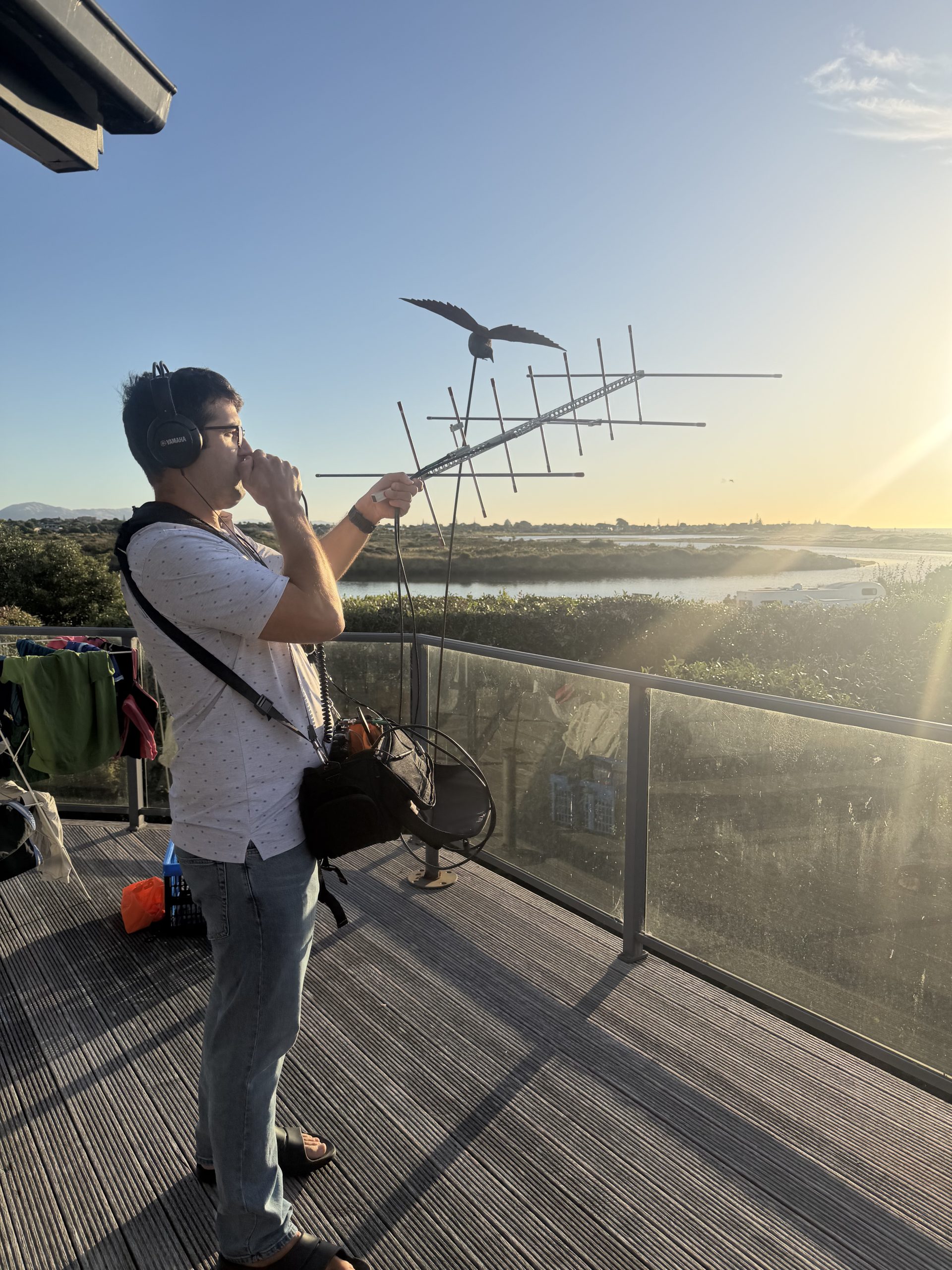
I just got back from an amazing two weeks in New Zealand for my honeymoon, and while I was clear from the get-go this was not a DXpedition, I did bring some radio gear to make a few contacts while I was there. We traveled extensively over both the north and south islands with little time for radio amidst our other activities including hiking, snorkeling with dolphins, driving 1000+ miles through incredible terrain, and taking a scenic flight and boat ride through the famous Milford Sound.
To start, getting a reciprocal ham radio license is incredibly easy for a ham with an Extra Class license; you just need to show up! Seriously, New Zealand has a policy where your U.S. license is valid as long as you follow the local rules and are temporarily visiting. You simply append ZL/ to the front or /ZL to the end of your call sign. I chose the former for my operations. I will also say I had some email correspondence with the New Zealand Association of Transmitters (NZART), the national organization of hams in New Zealand, and they were incredibly welcoming, friendly, and helpful as well!
Since radio was not a focus of this trip, I tried to go fairly light with my gear but still have HF and satellite capabilities. I brought my full satellite setup: Yaesu FT-817, Kenwood TH-D74A, Arrow Antenna, and associated cables and accessories. This would allow me to do both linear and FM satellites. For HF, I brought my QMX, my 4S Tuner, a few lengths of wire to tune up, and cables to hook to my iPhone to run FT8. Somewhat expectedly, I only used the satellite gear to make contacts since setting up HF just seemed like too much effort given the time I had to get on the air. I don’t regret bringing anything as I had no idea where and when I may be able to play radio. This is one place that satellite operations really shine in their “in and out” nature not requiring much setup or time to make some contacts.
Since I was hoping to add some grids toward my satellite VUCC/r award, and I figured LoTW is not as commonly used over there, I made up some Mobile Reply Cards (MRC) to send out along with my QSL card and self-addressed stamped envelopes back to the USA. After the contacts, I prefilled everything in these cards leaving the confirming station to just sign it and mail it back. I made this in Canva and got it printed at Walgreens when they had a deal on free custom double-sided photo cards. I cut them out and preaddressed envelopes beforehand so this was easy once I arrived. The hardest part provided to be buying the proper postage as our last full day in New Zealand ended up being a public holiday!


In the end, I was only able to get on four satellite passes since we had so much other stuff going on. I tried to focus on popular FM satellites since I knew satellite activity is not as high in that part of the world, so I was on one SO-50 and three ISS passes. Given the remoteness of New Zealand, it looked like linear satellites wouldn’t have necessarily given me that much more coverage other than into Australia (which does have an active satellite contingent from what I hear) but would have been harder to find contacts on. I netted three contacts in total, three of the passes had a single contact and one pass (on the ISS) I didn’t really hear anyone else. You don’t hear empty ISS passes in the states!
The satellite contacts I did make also took a different form than we’re used to in the states with a much slower pace and conversational format. Grid exchanges are somewhat of an afterthought it seemed like too. It was nice to quickly chat with three New Zealander stations including one station who had just gotten their license and I was their second QSO! I emailed each of the worked stations after the fact to let them know to expect my QSL card and MRC. Just like my other interactions with the locals, the hams I spoke to were very friendly and welcoming to this foreigner.
As of posting (February 21st, 2026), I have not received any of the cards yet, but my previous experience with NZ Post has shown it to be rather slow. I am hopeful that eventually I will be able to add these three grids toward my VUCC/r Award. The grids I worked from were RF73vd (Hahei), RE79md (Waikanae Beach), RE55fx (Lake Tekapo), and RE44ix (Queenstown – this is where I didn’t make any contacts).
While New Zealand is not a rare country on ham radio, it was still absolutely worth bringing my gear to get some new grids under my belt and make contact with some local hams. New Zealand was an incredible place in general, and a truly awesome honeymoon destination. I’m sure I’ll be back; two weeks was simply not enough to enjoy the entire country even though we certainly saw a lot!


